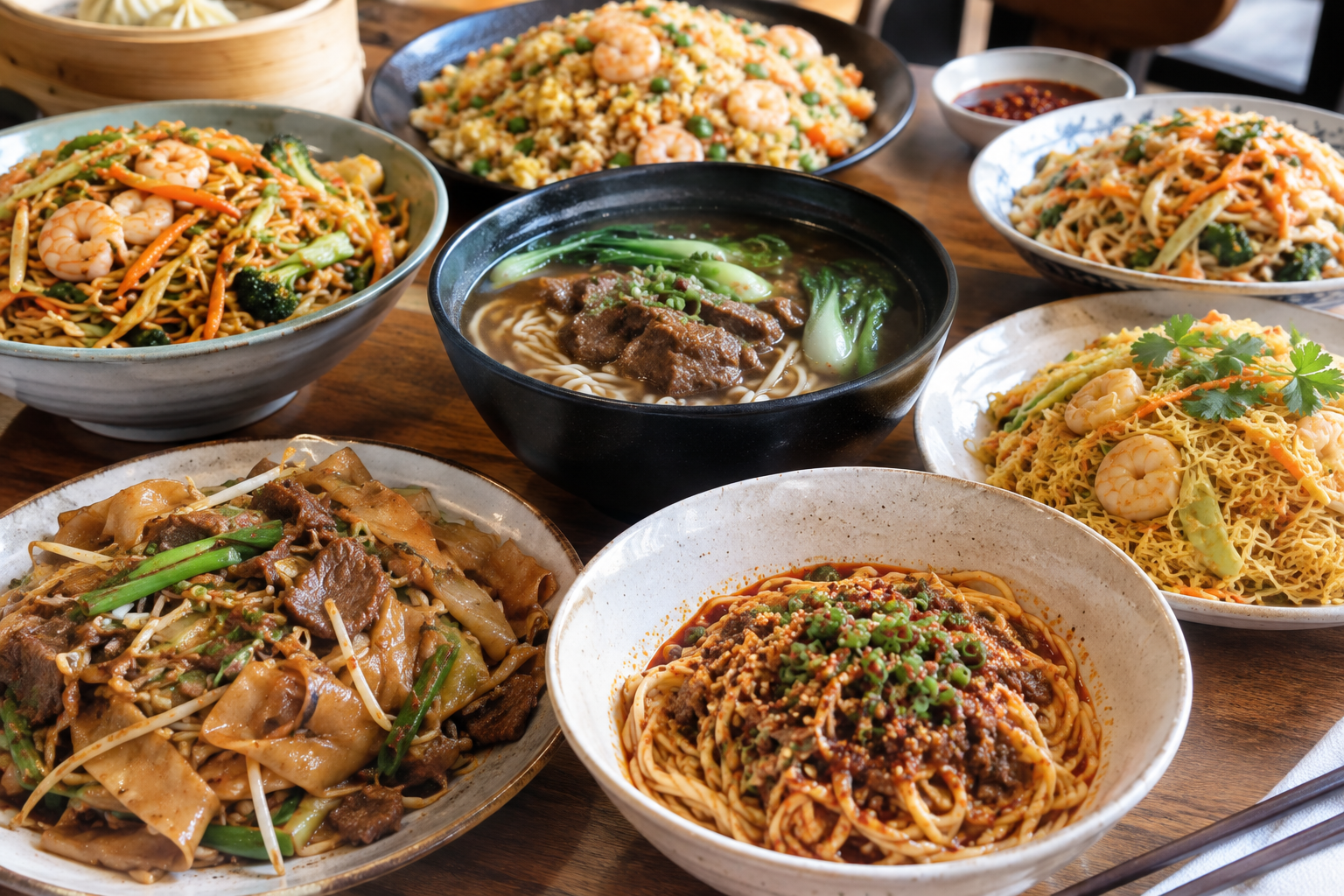
Chinese noodles are incredibly diverse, with different regions developing their own noodle shapes, cooking methods, sauces, and toppings. From chewy hand-pulled noodles and silky rice noodles to stir-fried lo mein and spicy Sichuan dan dan noodles, there is a noodle dish for almost every craving.
What makes Chinese noodles especially interesting is that there is no single way to prepare them. Northern Chinese cuisines are known for many wheat-based noodles, while southern and coastal regions have developed traditions featuring rice noodles, egg noodles, and other varieties. Sichuan noodles can feature bold combinations of chili and Sichuan peppercorn, while Cantonese noodle dishes often emphasize lighter sauces, seafood, meat, and fresh ingredients.
If you are ordering Chinese food and want something beyond fried rice or traditional entrées, noodles are an excellent place to start. And with many Chinese restaurants available through Springroll, you can explore different styles and find new favorites without having to leave home.
Why Are There So Many Different Chinese Noodle Dishes?
China has an enormous culinary landscape, and noodle traditions developed differently across regions.
Northern China is particularly well known for wheat-based noodles, including hand-pulled, hand-cut, and knife-cut varieties. In Sichuan, noodles are often paired with chili oil, Sichuan peppercorns, sesame, and other bold seasonings. Cantonese cooking features dishes such as chow mein, wonton noodles, and stir-fried rice noodles, while other regions are known for noodle soups, cold noodles, or thick, chewy noodles.
The noodle itself can completely change the experience. Thin egg noodles have a different texture from broad rice noodles, while hand-pulled noodles can be thick, springy, and pleasantly chewy.
Here are some popular Chinese noodle dishes and noodle styles you should know.
1. Lo Mein
Lo mein is one of the most recognizable Chinese noodle dishes in the United States. On many Chinese-American restaurant menus, it consists of soft wheat noodles tossed with vegetables, protein, and a savory sauce.
Common additions include chicken, beef, pork, shrimp, mushrooms, onions, carrots, cabbage, and bean sprouts.
The noodles are soft and chewy rather than crispy, making lo mein a good choice when you want a hearty, saucy noodle dish.
The term lo mein has a more specific Cantonese meaning as well. Traditionally, lo mein refers to boiled wheat noodles mixed with sauce, rather than necessarily being stir-fried. Restaurant versions outside China can vary considerably in preparation.
Because lo mein is so customizable on many restaurant menus, it is also a practical choice when ordering for a group.
2. Chow Mein
Chow mein is another classic Chinese noodle dish, but its texture can vary considerably depending on the regional or restaurant style.
The term generally refers to stir-fried noodles, but some versions are softer while others are pan-fried until crisp. Cantonese and Hong Kong-style chow mein is particularly known for thin noodles that can be pan-fried until crispy before being topped with meat, seafood, and vegetables.
The contrast between crisp noodles and saucy toppings is part of what makes this style so appealing.
If you enjoy stir-fried dishes but want more texture than traditional soft noodles, crispy-style chow mein is worth trying.
3. Chow Fun
Chow fun is made with wide, flat rice noodles. These noodles are soft, slippery, and chewy, giving the dish a completely different texture from lo mein or thin chow mein noodles.
One of the most familiar versions is beef chow fun, which combines broad rice noodles with beef and other ingredients in a savory stir-fry. The noodles are cooked over high heat, which can contribute to the characteristic smoky aroma associated with wok cooking.
Chow fun is strongly associated with Cantonese cuisine and is a great choice if you prefer broad rice noodles over wheat noodles.
4. Dan Dan Noodles
If you enjoy spicy food, dan dan noodles are a dish to put on your list.
Dan dan noodles are associated with Sichuan cuisine and are known for combinations of spicy, savory, nutty, and aromatic flavors. Depending on the preparation, the noodles may be served with chili oil, sesame or peanut-based sauce, minced pork, preserved vegetables, scallions, and Sichuan seasonings.
The dish can range from moderately spicy to intensely fiery depending on the recipe.
Unlike many Chinese-American noodle dishes that emphasize large portions of meat and vegetables, dan dan noodles often place more emphasis on the sauce and seasonings. The result is a concentrated, flavorful noodle dish.
5. Zhajiangmian
Zhajiangmian is a northern Chinese noodle dish made with wheat noodles and a rich fermented soybean-based sauce.
The sauce is traditionally prepared with fermented soybean pastes and may be combined with minced or diced pork. Fresh vegetables are often served alongside the noodles, providing contrast to the rich and savory sauce.
The flavor is hearty and deeply savory rather than primarily focused on heat.
Zhajiangmian is especially worth trying if you enjoy fermented flavors and substantial noodle dishes.
6. Biang Biang Noodles
Biang biang noodles are famous for their extremely wide, hand-pulled noodles.
The noodles are thick, long, and chewy, and are often served with chili oil, garlic, scallions, vegetables, and other flavorful toppings.
They are associated with Shaanxi cuisine and particularly with Xi'an.
The texture is one of the defining features of the dish. If you usually order thin noodles, trying biang biang noodles can be a completely different experience.
7. Hand-Pulled Noodles
Hand-pulled noodles are better understood as a style of noodle preparation rather than one specific dish.
The dough is repeatedly stretched and pulled to create long strands. Depending on the technique, the noodles can vary in thickness and shape, producing different textures.
Hand-pulled noodles can be served in soups, with stir-fried ingredients, or alongside rich sauces. Beef noodle soup is one well-known preparation, particularly in northwestern Chinese culinary traditions.
Because the noodles are shaped by hand, their thickness and texture can vary depending on the technique used.
8. Chinese Beef Noodle Soup
Chinese beef noodle soup is not one standardized recipe. Different regions have developed their own versions, using different broths, noodles, seasonings, and cuts of beef.
Some versions feature clear, aromatic broths, while others are darker and richer, with soy sauce, spices, chili, or other seasonings.
The noodles can also vary from thin strands to thick, hand-pulled varieties.
This diversity is part of what makes Chinese beef noodle soup so interesting. If you enjoy warm, brothy meals, exploring different regional versions can introduce you to very different combinations of noodles, beef, and broth.
9. Wonton Noodle Soup
Wonton noodle soup combines two Cantonese favorites: delicate wontons and noodles.
Wonton noodles are a Cantonese-origin dish particularly associated with southern China and Hong Kong. They commonly feature thin egg noodles served with wontons, broth, and leafy vegetables.
The wontons may contain pork, shrimp, or a combination of ingredients.
Hong Kong-style versions are particularly known for thin, springy egg noodles. Compared with richer stir-fried noodle dishes, wonton noodle soup offers a lighter, broth-based option.
10. Shanghai Fried Noodles
Shanghai fried noodles are thick wheat noodles stir-fried with meat and vegetables in a savory sauce.
The noodles are typically more substantial than thin egg noodles, and the stir-frying process gives them a satisfying chewy texture.
Pork is a common protein in Shanghai-style fried noodles, although restaurant versions may offer other choices.
The dish is hearty and savory, making it a good choice for anyone who enjoys substantial stir-fried noodles with a rich sauce.
11. Mei Fun and Other Rice Noodles
Mei fun refers to thin rice vermicelli rather than one single dish. These noodles are used in a variety of Chinese and Chinese-influenced preparations and can be stir-fried with vegetables, meat, seafood, or eggs.
Because rice vermicelli is thinner and lighter in texture than many wheat noodles, it creates a different eating experience from lo mein or chow mein.
What About Singapore-Style Noodles?
Singapore-style noodles are another popular preparation found on many Cantonese and Chinese-American restaurant menus.
Despite the name, Singapore-style noodles are generally considered a Cantonese/Hong Kong creation rather than a traditional Singaporean dish. The dish typically uses thin rice vermicelli stir-fried with curry powder and ingredients such as shrimp, pork, chicken, eggs, and vegetables.
You may find it listed as "Singapore Noodles," "Singapore Style Noodles," or "Singapore Mei Fun" on restaurant menus.
For example, Hong Kong Chinese - Spring currently lists Singapore Noodle made with curry-flavored angel-hair rice noodles, shrimp, and BBQ pork.
12. Cold Chinese Noodles
Not every Chinese noodle dish is served hot.
Cold noodle dishes are popular in several parts of China and can feature noodles tossed with spicy sauces, sesame, vinegar, chili oil, vegetables, or other seasonings.
The combination of chilled noodles and bold sauces creates a refreshing contrast, especially when you want something flavorful without a heavy broth or stir-fry.
Sichuan-style cold noodles, for example, can bring together chili, sesame, garlic, and other aromatic flavors.
Which Chinese Noodle Dish Should You Try?
The best dish depends on the flavors and textures you enjoy.
For something familiar: Try lo mein or chow mein.
For wide, chewy noodles: Go for chow fun or another broad noodle dish.
For spicy flavors: Try dan dan noodles or Sichuan-style cold noodles.
For a comforting soup: Chinese beef noodle soup or wonton noodle soup are good choices.
For something lighter in texture: Consider mei fun or another rice noodle dish.
For a different texture: Look for hand-pulled or biang biang noodles.
For something hearty and savory: Try zhajiangmian or Shanghai fried noodles.
And if you are ordering for a group, ordering several different noodle dishes can be a fun way to compare textures and flavors.
What Goes Well With Chinese Noodles?
Noodles can easily be a complete meal on their own, but they can also work well as part of a larger Chinese takeout spread.
For a family meal, consider pairing noodles with dumplings, spring rolls, fried rice, vegetable dishes, or an entrée such as General Tso's chicken or Mongolian beef.
If you are ordering several dishes, choosing noodles with different textures can make the meal more interesting. For example, pair soft lo mein with crispy chow mein, or choose a savory noodle dish alongside spicy Sichuan noodles.
Many noodle dishes can also work well as part of a shared takeout meal, especially when several dishes are ordered for the table.
Explore Chinese Noodles From Restaurants on Springroll
One of the easiest ways to discover different Chinese noodle dishes is to look at the menus of local Chinese restaurants on Springroll.
For example, Taste of China - Spring currently offers several noodle styles, including chicken, beef, shrimp, and house special lo mein, Cantonese chow mein, Singapore-style noodles, and chow fun.
If you want to explore Cantonese and Sichuan-style noodle dishes, Hong Kong Chinese - Spring currently lists beef and shrimp flat rice noodles, Cantonese chow mein, Hong Kong-style egg noodles, and Sichuan dan dan noodles.
For fans of Sichuan flavors, Szechwan Noodle - Tempe offers several noodle options, including Sichuan cold noodles and other noodle and rice-noodle dishes.
These are just a few examples. Springroll brings together local Asian restaurants in one place, making it easier to browse menus, discover dishes you may not have tried before, and order from participating restaurants.
Order Your Next Bowl of Chinese Noodles
Chinese noodles are far more diverse than the familiar lo mein and chow mein found on many American Chinese restaurant menus.
From wide and chewy chow fun to fiery dan dan noodles, comforting beef noodle soups, crispy chow mein, and delicate rice noodles, there is an entire world of flavors and textures to explore.
The next time you are craving Chinese food, consider stepping outside your usual order. Try a noodle dish you have never had before, or compare two different styles to see which texture and flavor combination you prefer.
With Springroll, you can discover Chinese restaurants in your area, browse their menus, and order your favorites online.
Ready for noodles? Explore Chinese restaurants on Springroll.com and find your next favorite dish.